Corporate Savannah

From the corporate savannah

Field Notes

The serious lines beneath the films. Observations on workplace culture, office politics and the things a herd does when it believes nobody is watching.

Meetings and decision theatre

What happens before the room gathers, while it performs, and after the numbers are put away.

Episode 04The Town Hall

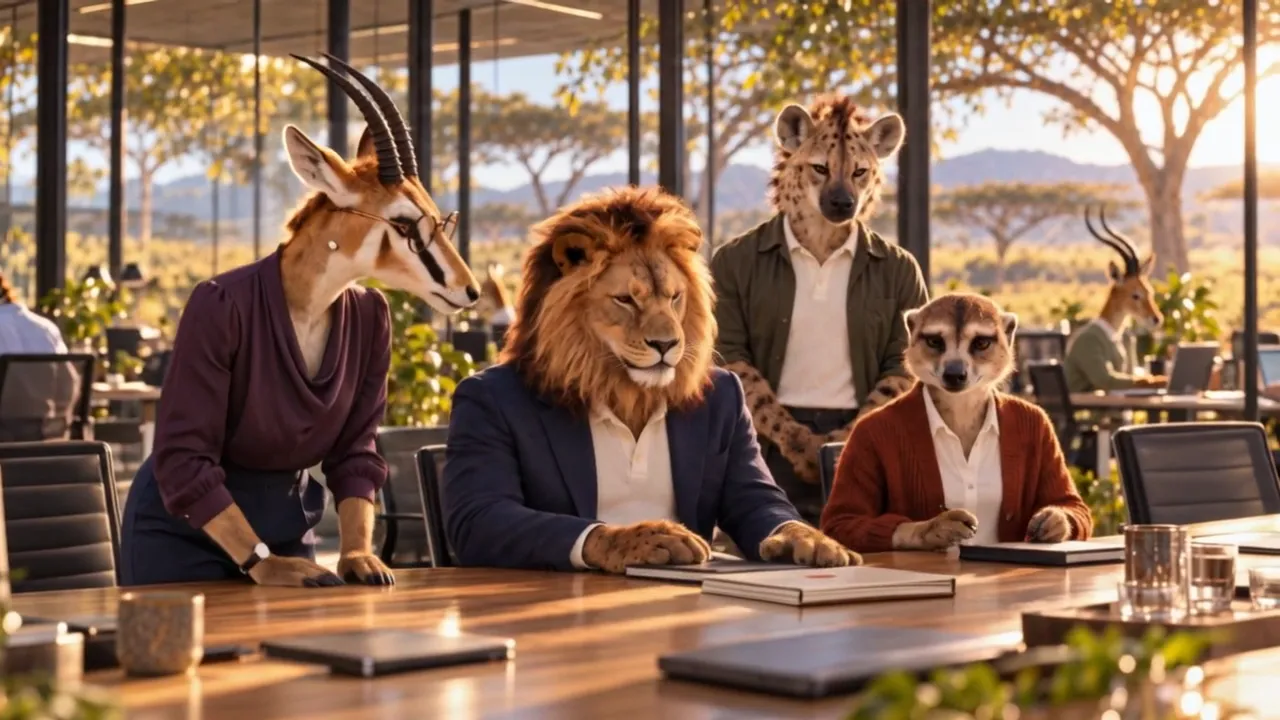
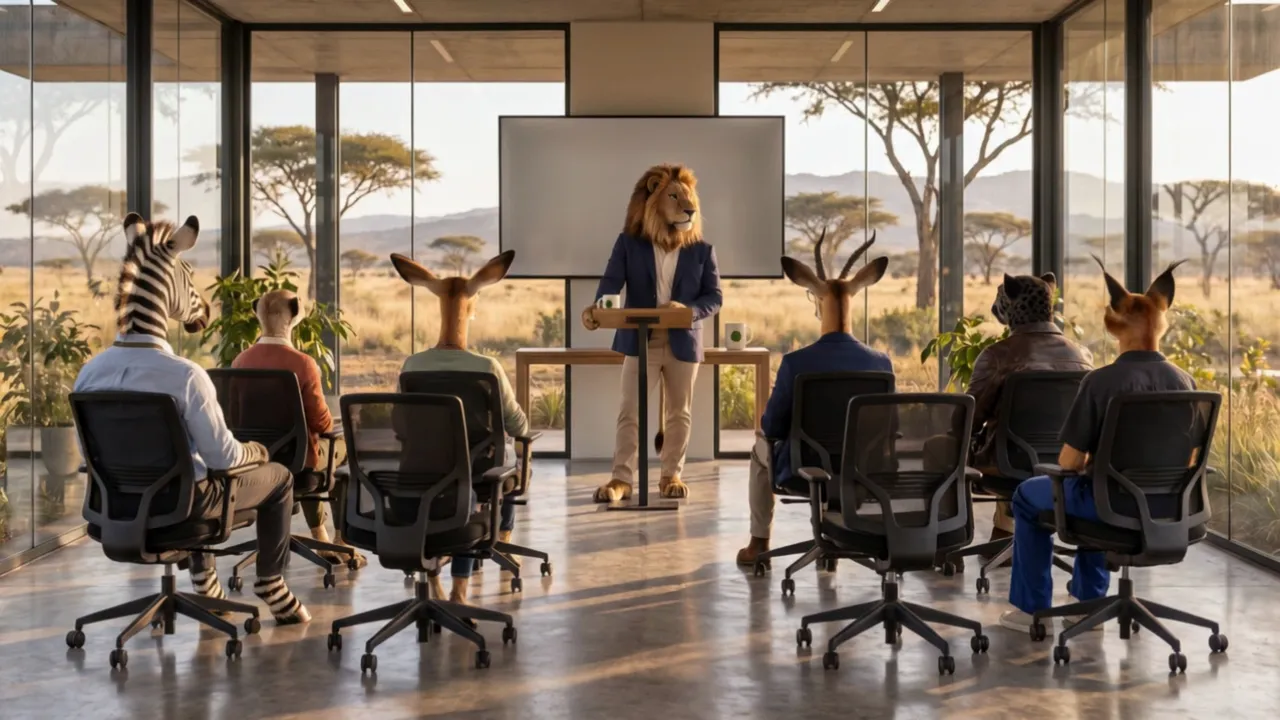
The herd is summoned to the great clearing, where the values appear on the cliff face.

Field note

Values are not what a company says at the town hall. They are what it tolerates at the watering hole afterwards. If the words on the screen never change a single decision, they are decoration. An honest test: name one thing your organisation stopped doing because of its values.

Watch the film
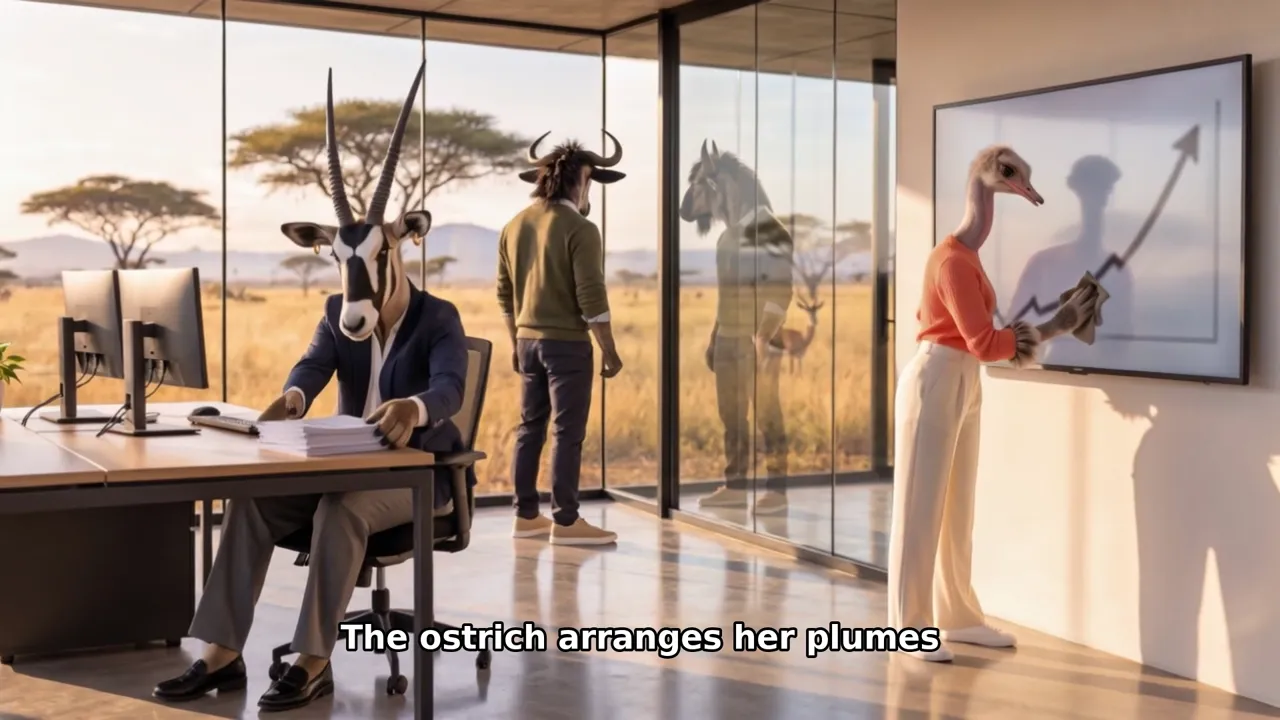
Episode 13The Pre-Meeting

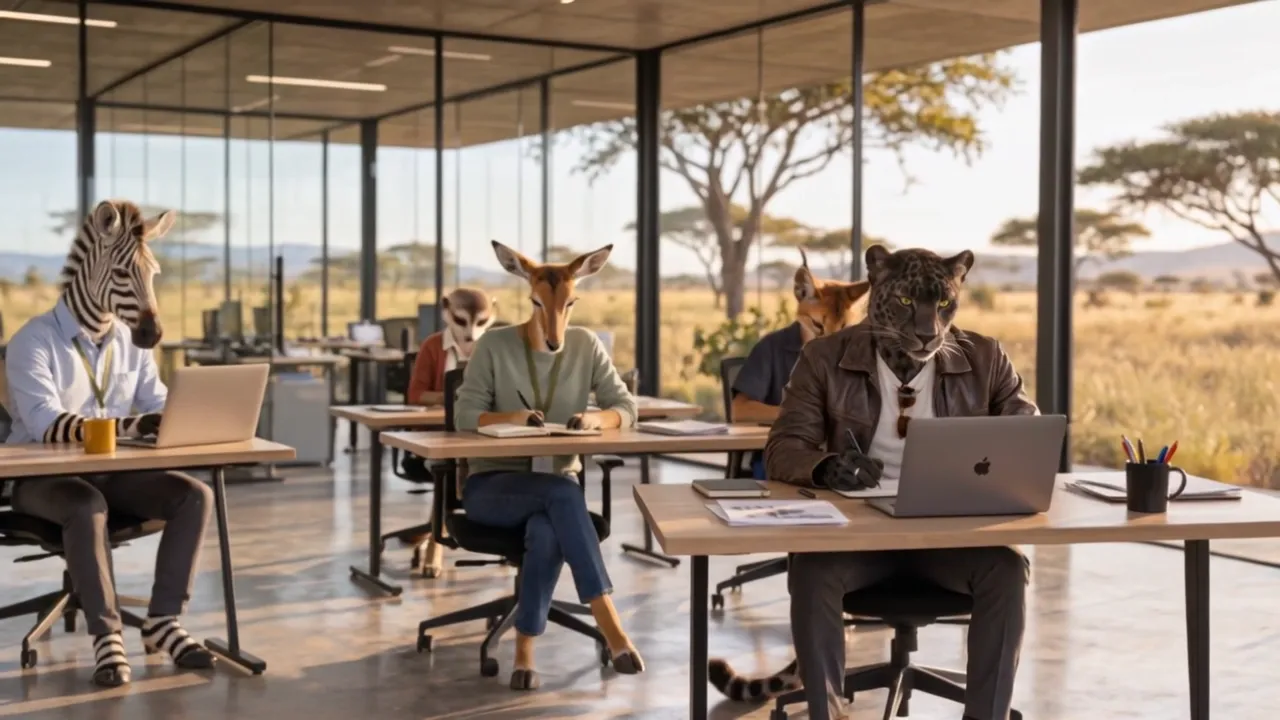
The meeting before the meeting.

Field note

Most decisions are made before the meeting, in a smaller room, by fewer people. Some of that is useful: nobody wants to align from scratch in front of forty colleagues. The trouble starts when the big meeting becomes a performance of a decision already taken. If one honest question can freeze the room, the room was never deciding anything. Invite the newest person into the smaller room.

Watch the film
Episode 15The Quarterly

The herd gathers to account for the season.

Field note

Every boss answers to someone, and the whole herd can feel it days before the meeting. The best boards ask one good question and listen to the whole answer. The worst make everyone perform: the curve polished, the numbers balanced, the nodding rehearsed. If your people spend a week preparing to look calm for one afternoon, ask what they could have built in that week.

Watch the film

Reorgs and structural change

New boxes, new arrivals and the long migration back to the same call.

Episode 05The Reorg

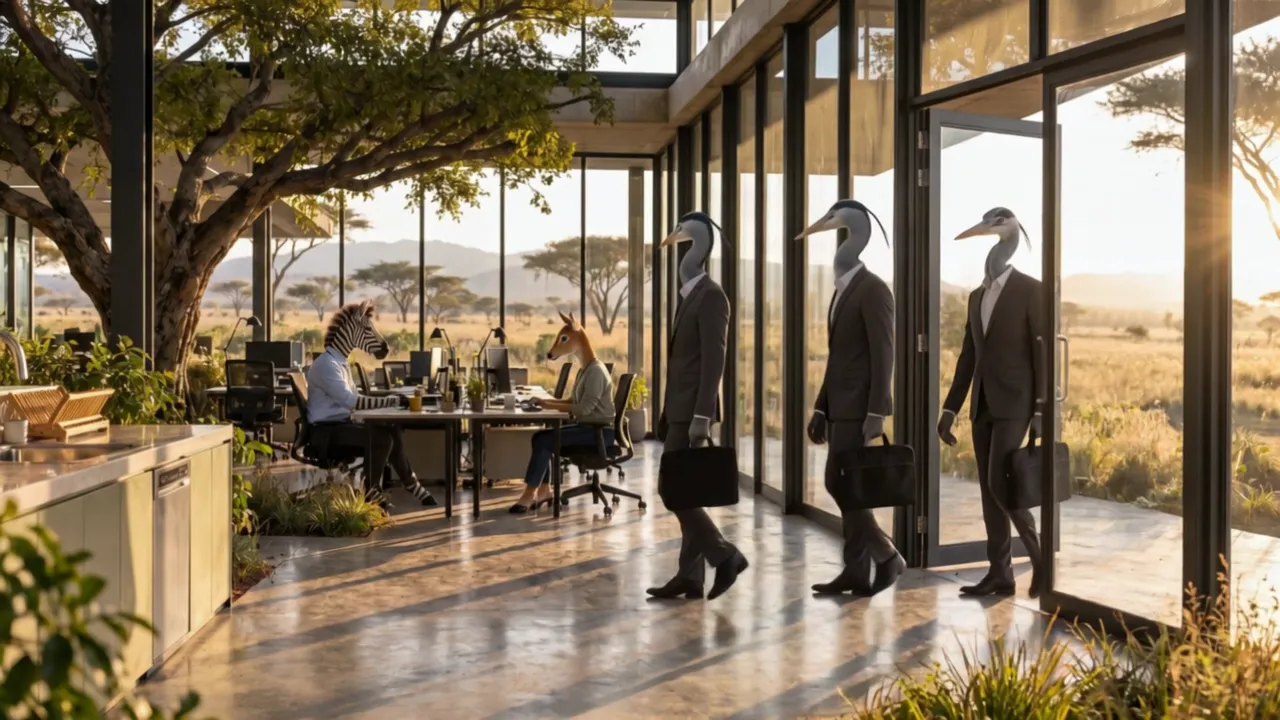
Tall grey birds arrive from the far side of the world, and the colony is rearranged.

Field note

A reorganisation often changes the map when the problem is the terrain. Boxes and lines move in an afternoon; habits, incentives and relationships take years. Before redrawing the chart, ask what exactly the new lines will make easier on an ordinary Tuesday. If nobody can say, the birds will be back.

Watch the film
Episode 09The Arrival

A stranger is groomed on his first day and handed the whole herd. The elephant watches.

Field note

Organisations fall in love with newcomers because a stranger carries no bad news yet. Meanwhile the people who know where the water is get quietly routed around. Bringing in talent from outside is healthy. Ignoring the memory you already have is the most expensive habit a company can keep.

Watch the film
Episode 10The Great Migration

After a season in scattered territories, the herd returns to the office, to sit side by side on the same call.

Field note

Bringing people back to one room does not create collaboration by itself; the work has to need the room. If everyone is still on the call, the commute was the ritual, not the purpose. The best reason to gather is a problem that is easier to solve together, and the best leaders are in the room when it is.

Watch the film

Trust and micromanagement

How capable people learn to wait, and how organisations mistake visibility for fitness.

Episode 07The Watchful Parent

The hyena helps the gazelle, and helps, and helps, until she stops moving.

Field note

Micromanagement is rarely malice. It is usually anxiety dressed as help. The cost is invisible at first: capable people learn to wait for permission, and the manager reads the waiting as proof that supervision was needed. Trust is not a reward for performance. It is very often the cause of it.

Watch the film
Episode 08Natural Selection

The evidence is examined. The fittest do not always rise.

Field note

Proximity to power is a real skill, and organisations reward it more than they admit. Reviews that weigh visibility over results select for exactly the behaviour they claim to dislike. If you want to know what a company truly values, do not read the values. Look at who got the second chair.

Watch the film

Credit and visibility

The hunt, the discovery and the chorus that follows attention around the plain.

Episode 01Everyone's a Marketer

The leopard's fresh kill draws a crowd. Everyone has something to add.

Field note

Marketing is the one discipline everyone believes they could do, because everyone is a customer. That is exactly what makes it hard: the only audience that matters is the one you are not. Opinions are free and plentiful. Judgement is the job, and the most useful question in the room is the unfashionable one: who is this actually for?

Watch the film
Episode 06The Hunt

A kill on the open plain, and every creature remembers bringing it down.

Field note

Attribution is marketing's oldest argument. Every channel's dashboard confirms that its own channel made the sale, just as every collar confirmed its own animal. The work that actually brings results in is rarely the loudest in the room. Measure honestly, and remember who did the quiet work.

Watch the film
Episode 11The Discovery

The zebra maps a promising new route, then steps away for water. The hyena, who was only resting, steps in.

Field note

Credit in organisations is rarely settled by who did the work. It is settled by who is standing beside it when the attention arrives. The people who find things are often too busy to present them, and presenting is a skill, not a crime. But before applauding, a good leader asks one quiet question: whose thinking is this?

Watch the film
Episode 12The Chorus

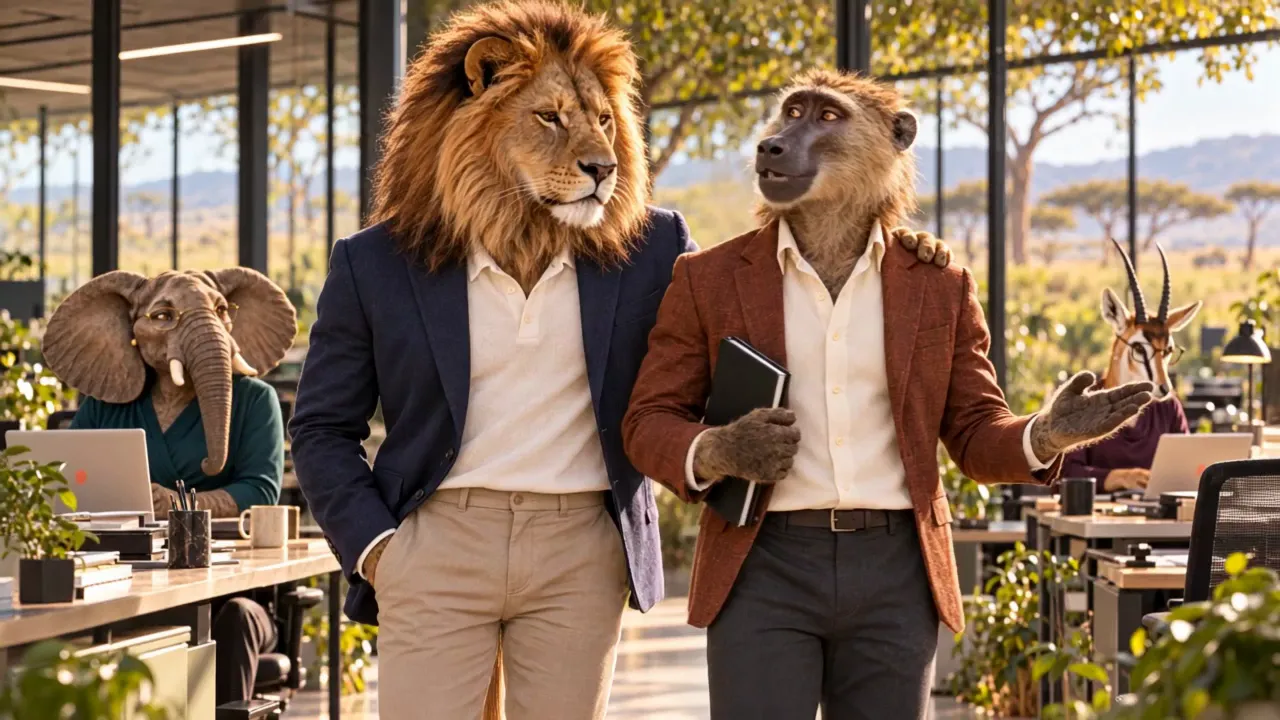
The lion announces that the new door signs are up. The whole herd replies, to everyone, long after he has fallen asleep.

Field note

Reply-all is rarely about information. It is a way of being seen to care, and where visibility is rewarded, everyone learns to perform attention. The cost is quiet and real: a whole team interrupted to read the same thank-you twenty times, while the person it was meant for stopped reading long ago. Say thanks once, to the sender, and go back to the work.

Watch the film

Communication and rumour

The notes people write, the stories silence creates and the signals the herd reads wrong.

Episode 03The Missing Lunch

In the cold white cavern, provisions vanish, and the notes begin.

Field note

Trust is built from small, boring things, like a labelled lunch surviving until noon. When the small promises fail, people stop talking and start writing notes. The passive-aggressive note is a leading indicator. The conversation it replaced is the thing worth having.

Watch the film
Episode 14The Grapevine

News travels through the herd.

Field note

Rumours don't need facts; they need silence. A closed door, an empty chair at lunch, and the organisation writes its own story, usually darker than the truth. Leaders tend to say nothing until there is something to say. But "nothing has changed" is also news, and it is the cheapest message a company will ever send. Open the door, even when there is only a sandwich behind it.

Watch the film

Culture and belonging

The small daily votes that reveal what the organisation means when it says values, commons or family.

Episode 02The Watering Hole

At the communal watering hole, a tower of abandoned mugs rises with no architect and no owner.

Field note

Shared spaces reveal a culture faster than any values slide. A kitchen full of mugs is not a hygiene problem; it is a small daily vote on whether anyone owns the commons. In my experience, teams that tidy up without being asked tend to deliver without being chased. The mug is a very small mirror.

Watch the film
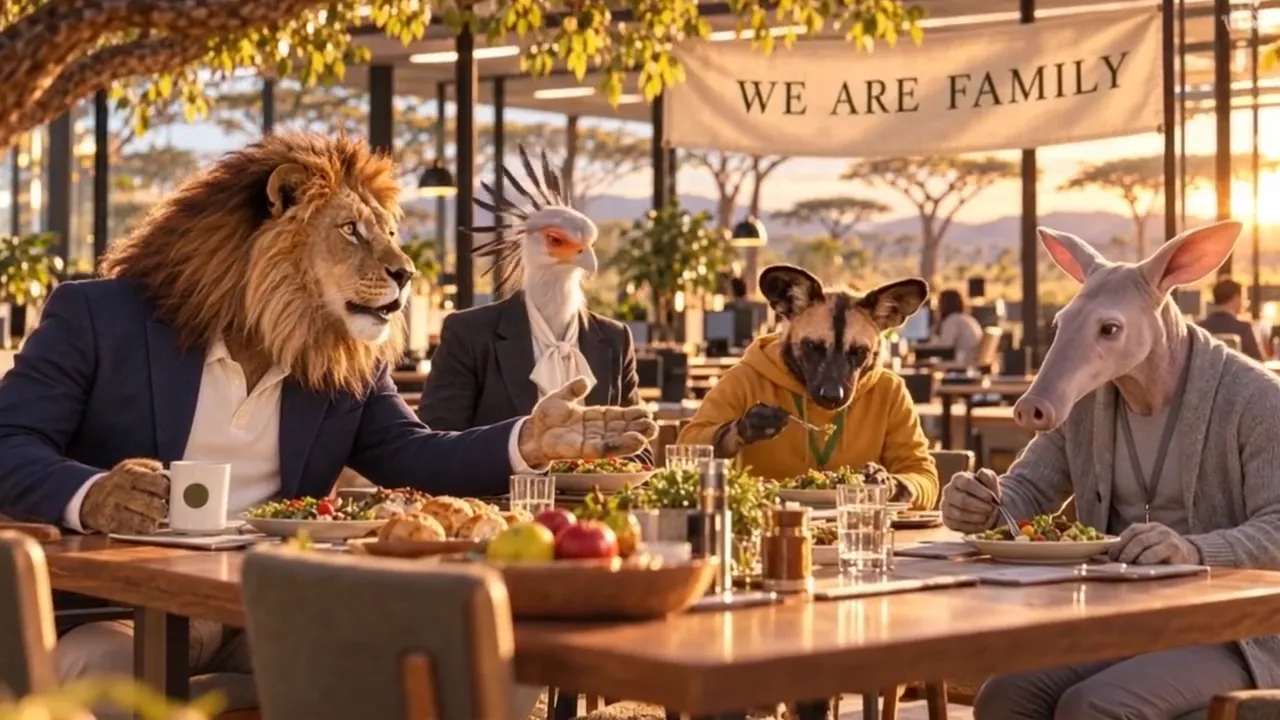
Episode 16The Family

The herd calls itself a family. One member discovers what that means.

Field note

Belonging is easy to promise. Watch what happens when a member of the herd needs it. A company that calls itself a family is making a promise it rarely intends to keep: families do not restructure, and they do not ask for two weeks' notice. The word costs nothing in the onboarding deck and everything on the hard day. Use it carefully, or better, be it quietly and never say it at all.

Watch the film
The December specialThe Mating Season

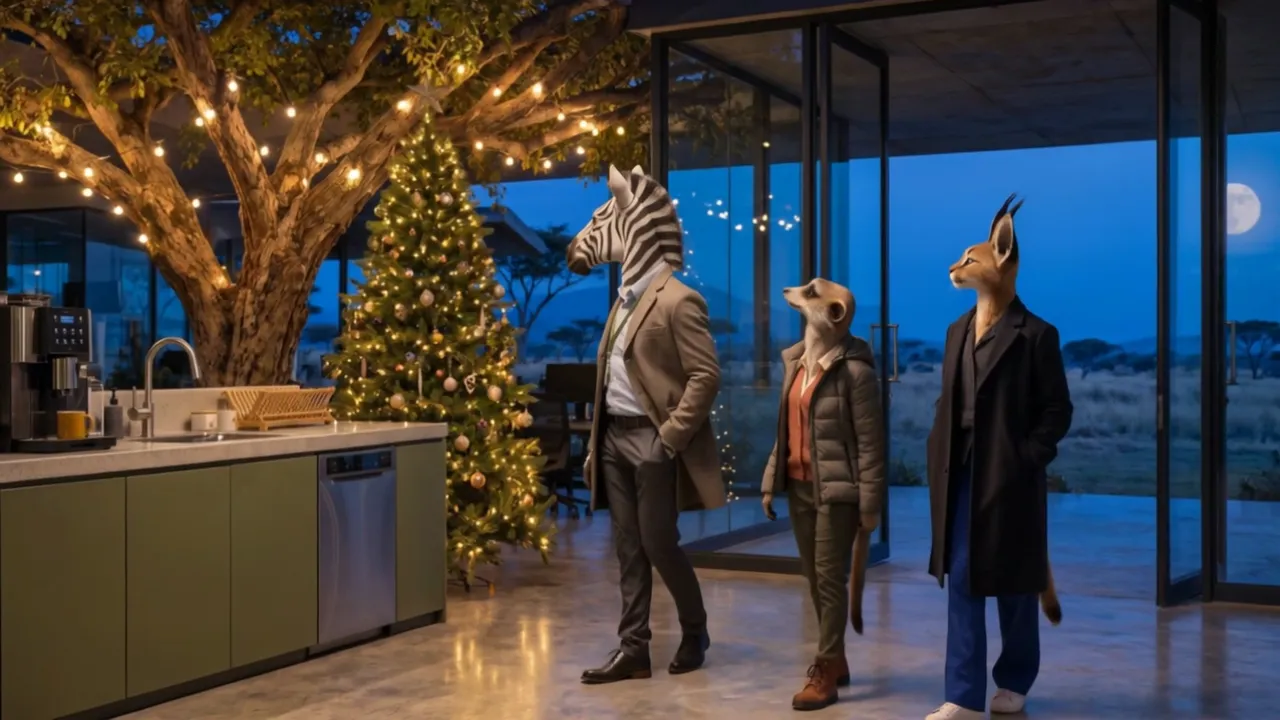
Once a year, when the nights are longest, the herd puts on its winter plumage.

Field note

The office party is the one night the organisation chart takes off its tie. For a few hours you see who people are when the roles are off, and it is usually kinder and stranger than the chart suggests. Most teams would do well with a little of that in March, too.

Watch the film

Brand, sales and the long work

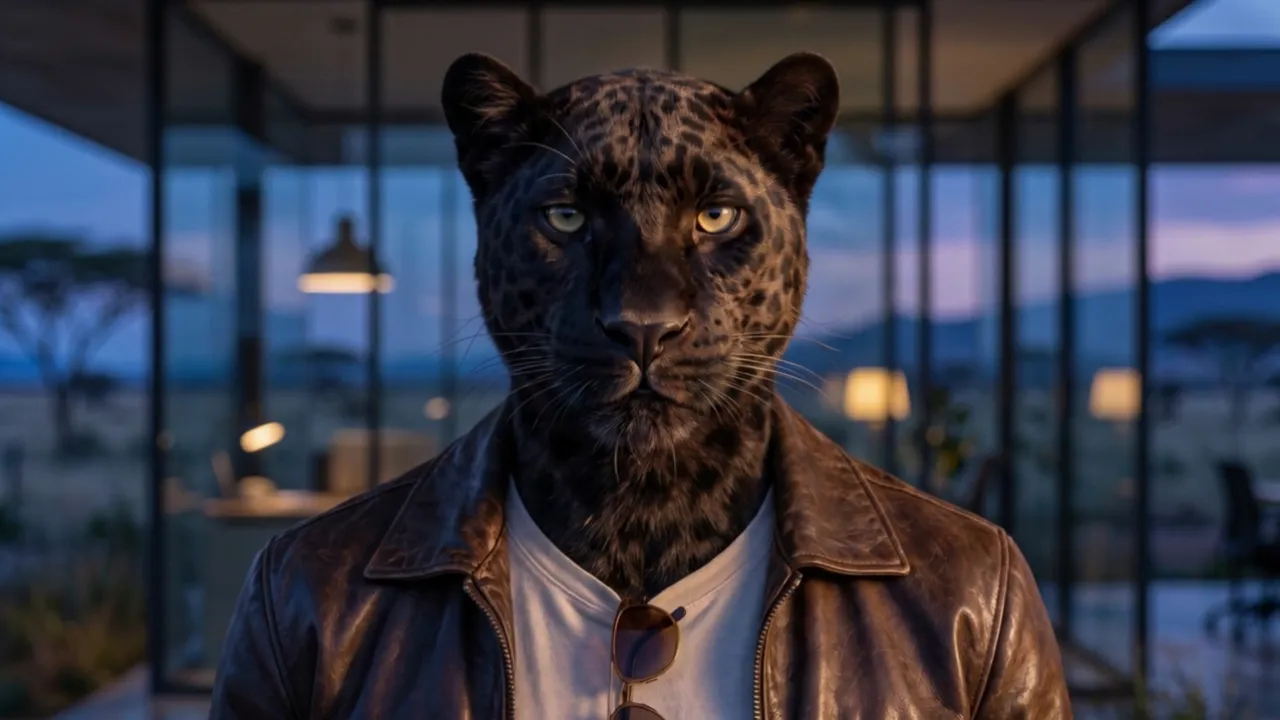
Six nights with the leopard: rebrands, feedback, voice, urgency and the empty plain after the quarter.

Day 9Changing Spots

The herd has decided the leopard's spots feel familiar. Three weeks later: a remarkable transformation.

Field note

Most rebrands start when the people inside get bored of a pattern the market has only just learned. The team sees the logo every day; the customer sees it for two seconds a week. Familiarity is the asset, not the problem. Before you change the spots, ask who is actually tired of them.

Watch the film
Day 14The Ninth Nest

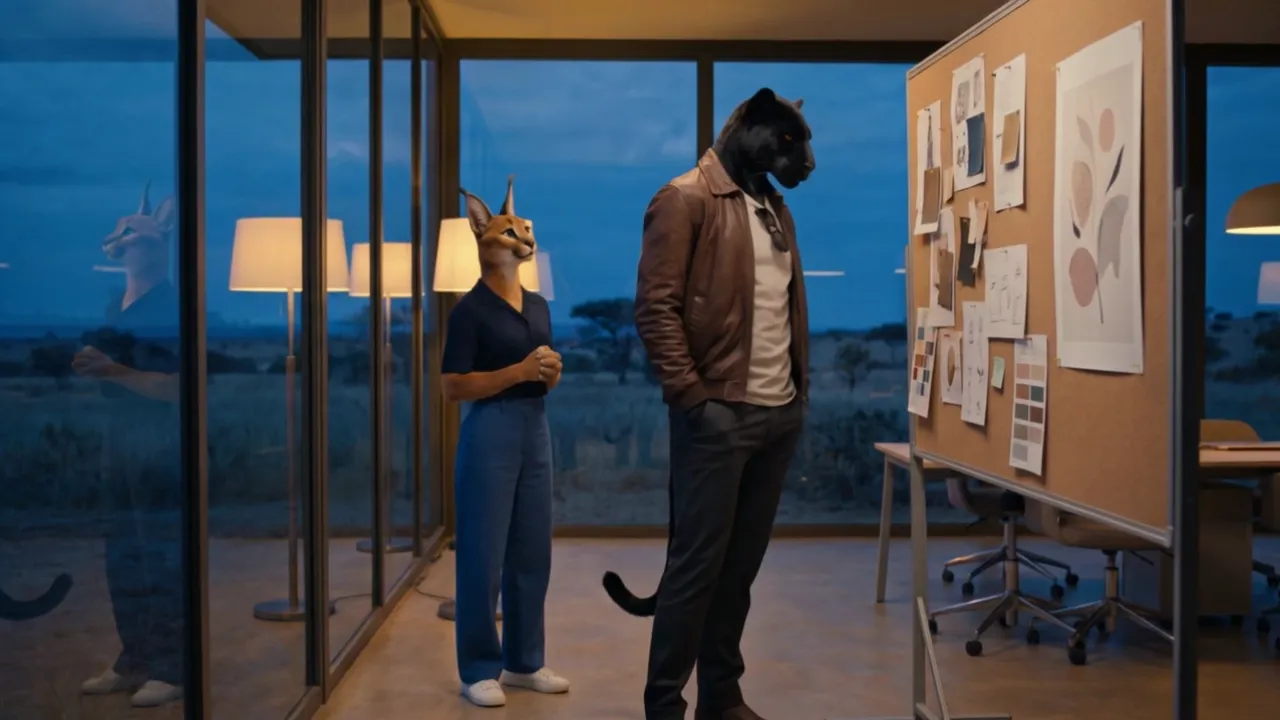
The caracal builds. The leopard inspects. Nine nests later, everyone is aligned.

Field note

Every designer has built the ninth nest. Feedback that only says what is wrong, never what is wanted, turns craft into guesswork. The first version is often the right one; it simply arrived before the brief did. Say what you want before you ask for the first draft, and keep every strand.

Watch the film
Day 19The Sneeze Vote

The leopard finds new grass. The pack votes by sneezing. The lion only ever needs one.

Field note

Everybody has a voice. Not everybody has a vote. Most organisations say the first and practise the second, and the gap between the two is where good people burn out. Be honest about whose sneeze counts. And if you have found the new shoot, sometimes the job is to put it under the right nose.

Watch the film
Day 27Mixed Signals

Sales is hungry. The leopard answers with his most beautiful leap.

Field note

Frustration is a function of misaligned expectations and poor communication. Sales needs a lead today; brand builds a signal for next year. Both are right, and each reads the other's signals wrong. A beautiful campaign that tells the buyer you are not worth the chase is still a beautiful campaign. Agree what the leap is for before you leap.

Watch the film
Day 38The Cache

The leopard's best kill waits in the tree for tomorrow. So does the lion.

Field note

The urgent eats the important. Brand work is the kill in the tree: made with patience, meant to feed you for days, always saved for tomorrow. Then the quarter runs short and someone who never climbs comes up to eat it. Protect the long work by giving it a date, not a later.

Watch the film
Day 89The Empty Plain

On the eighty-ninth day the pride takes everything. Next season arrives empty.

Field note

Harvest the whole funnel in one quarter and the next quarter finds an empty plain. The pipeline that looks like a marketing problem in March was usually a sales decision in December. Someone has to watch the calves. Let them.

Watch the film